

Allergic Reactions Treatment Clinic in Flowery Branch, GA
Allergic reactions can develop unexpectedly when the immune system responds to substances such as certain foods, medications, insect stings, or environmental allergens. Symptoms may range from localized skin irritation and itching to more noticeable swelling or discomfort. At MedLife Primary & Urgent Care, we offer medical assessments and appropriate treatment for non-emergency allergic reactions, helping patients understand their symptoms and receive care based on their individual health needs. For more information, contact us or request an appointment online. We are conveniently located at 4038 Winder Hwy, Flowery Branch, GA 30542.
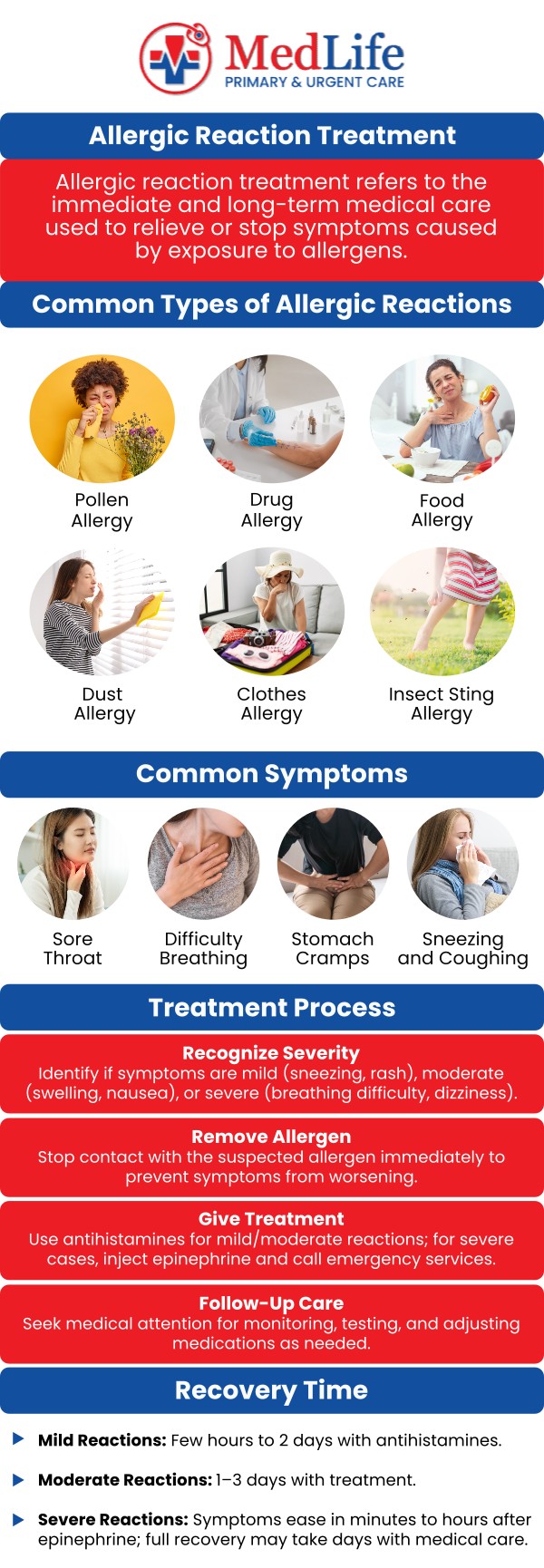
Table of Contents:
What are the common causes of allergic reactions?
What symptoms can occur during an allergic reaction?
How are allergic reactions diagnosed and treated?
When should you seek medical care for an allergic reaction?
How Can MedLife Primary & Urgent Care Help With Allergic Reactions in Flowery Branch, GA?
Allergic reactions happen when the immune system mistakes a normally harmless substance, called an allergen, for a threat. Symptoms may include sneezing, itching, hives, swelling, digestive issues, or breathing problems.
At MedLife Primary and Urgent Care, you can discuss allergy symptoms with a healthcare professional who can assess your concerns, review potential triggers, and help determine appropriate next steps.
Pollen, Dust Mites, Mold, and Animals
Common airborne allergens include pollen from trees, grasses, and weeds; dust mites in bedding and upholstery; and mold spores. Proteins in animal skin flakes, saliva, and urine can also trigger reactions.
These allergens often cause sneezing, a runny or stuffy nose, and itchy or watery eyes. They can also worsen asthma symptoms. If symptoms keep returning or interfere with daily activities, a primary care visit can help you explore ways to manage them.
Foods
Common food allergens include milk, eggs, peanuts, tree nuts, wheat, soy, fish, shellfish, and sesame. Reactions may range from hives or vomiting to anaphylaxis, a potentially life-threatening emergency.
A clinician can review your symptoms and recommend further evaluation or an allergist referral when appropriate.
Medicines
Antibiotics can cause allergic reactions. However, side effects such as nausea do not necessarily indicate an allergy.
If you suspect a medication reaction, contact a healthcare professional promptly for guidance. Be prepared to share the medication name, when you took it, and when symptoms began.
Insect Stings
Venom from bees, wasps, hornets, yellow jackets, and fire ants can trigger allergic reactions. Pain and limited swelling around a sting are common and do not necessarily mean you have an allergy.
Widespread hives, swelling away from the sting, dizziness, or breathing difficulties may indicate a more serious reaction. Severe symptoms require emergency care rather than an urgent care visit.
Latex and Substances That Touch the Skin
Natural rubber latex, found in some gloves and medical products, can cause itching, hives, or more severe reactions. Nickel in jewelry, fragrances, preservatives in skin-care products, and plants such as poison ivy can cause allergic contact dermatitis.
This itchy rash often develops hours to days after contact. A medical evaluation can help identify possible triggers and guide treatment, especially if the rash is persistent, widespread, or uncomfortable.
An allergic reaction can cause mild to severe symptoms, often within minutes to hours of exposure to a trigger such as food, medication, an insect sting, or latex. MedLife Primary and Urgent Care can help evaluate mild, persistent, or recurring allergy symptoms and guide you on next steps.
Common Allergy Symptoms
Symptoms may include:
• Sneezing and a runny or stuffy nose
• Itchy or watery eyes
• Itching of the skin or mouth
• Redness, hives, or swelling around the eyes, lips, or face
• Nausea, stomach cramps, vomiting, or diarrhea
Recognizing a Severe Allergic Reaction
A severe allergic reaction, called anaphylaxis, can be life-threatening. Warning signs include throat tightness, a hoarse voice, difficulty swallowing, tongue swelling, wheezing, trouble breathing, dizziness, fainting, or collapse.
Symptoms can worsen quickly, and anaphylaxis can occur without hives or other skin changes. If anaphylaxis is suspected, call 911.
Allergic reactions occur when the immune system responds to a substance that is usually harmless, such as pollen, certain foods, medicines, or insect venom. MedLife Primary and Urgent Care can be a starting point for evaluating non-life-threatening allergy symptoms, discussing treatment options, and determining whether specialist care is needed.
An allergy evaluation begins with a medical history and physical examination. Your healthcare provider will ask about your symptoms, when they started, possible triggers, and any previous reactions. Keeping a record of foods, medicines, exposures, and symptoms can help identify patterns.
Depending on your symptoms, your provider may recommend allergy testing or a referral to an allergist.
How are allergic reactions treated?
For non-emergency symptoms, MedLife Primary and Urgent Care can help you discuss a treatment plan based on the suspected trigger, symptom severity, and your medical history. Treatment may include:
• Trigger avoidance: Practical steps such as checking food labels, reducing environmental exposures, or reviewing medicines with your provider. Avoid unnecessary dietary restrictions, especially for children.
• Nasal sprays and eye drops: Corticosteroid nasal sprays can help persistent nasal allergies, while appropriate eye drops may relieve itchy, watery eyes.
• Skin care: Avoiding the trigger, using moisturizers, and applying appropriate topical corticosteroids may help contact dermatitis.
If symptoms persist, recur, or require specialized treatment, your provider may recommend an allergist. An allergist can assess whether treatments such as allergy shots or under-the-tongue immunotherapy are appropriate.
Get help managing allergy symptoms
For non-emergency allergy concerns, contact MedLife Primary and Urgent Care to discuss an evaluation. If you are at risk of anaphylaxis, ask your healthcare provider about epinephrine auto-injectors, training on their use, a written emergency action plan, and referral to an allergist.
Knowing when to visit MedLife Primary and Urgent Care and when to call 911 can help you get the right care for an allergic reaction.
Call 911 for signs of a severe allergic reaction.
Anaphylaxis is a potentially life-threatening emergency. Call 911 immediately rather than visiting a primary care or urgent care office if you experience:
• Trouble breathing, wheezing, or throat tightness
• Difficulty swallowing or swelling of the tongue or throat
• Fainting, severe dizziness, or sudden weakness
Seek prompt care for worsening or widespread symptoms
Contact MedLife Primary and Urgent Care for timely assessment of non-emergency allergy symptoms that are worsening, spreading, or not improving. These may include:
• Widespread hives or a spreading, itchy rash
• New facial or lip swelling without emergency warning signs
• A suspected medication reaction
• Symptoms that continue despite initial treatment
If swelling involves the tongue or throat, or occurs with breathing difficulty, faintness, or other signs of anaphylaxis, call 911 immediately.
Schedule a visit for persistent or recurring symptoms
Mild, localized itching, a small rash, or sneezing without other symptoms can often be managed by avoiding the suspected trigger and following guidance from a healthcare professional.
If symptoms persist, keep returning, disrupt your daily activities, or have no clear cause, schedule an appointment with MedLife Primary and Urgent Care to discuss evaluation and treatment options.
At MedLife Primary & Urgent Care, our team provides personalized evaluation and treatment for mild allergic reactions based on your symptoms, medical history, and potential allergen exposure. We assess common allergic symptoms, including skin rashes, hives, itching, redness, and mild swelling, to determine appropriate treatment options. Our approach focuses on relieving discomfort, identifying potential triggers, and helping patients understand how to manage their symptoms effectively.
Our healthcare providers develop individualized care recommendations based on each patient’s specific needs and the severity of their allergic reaction. We also offer guidance on avoiding known allergens, recognizing early warning signs, and reducing the risk of future reactions. At MedLife Primary & Urgent Care in Flowery Branch, GA, our team is committed to providing attentive medical care that supports your comfort, safety, and long-term health. For more information, contact us or request an appointment online. We are conveniently located at 4038 Winder Hwy, Flowery Branch, GA 30542. We serve patients from Flowery Branch GA, Oakwood GA, Gainesville GA, Braselton GA, Buford GA, Sugar Hill GA, and surrounding areas.
Check Out Our 5 Star Reviews


Additional Services You May Need
• Urgent Care
• Abscess Incision/Drainage
• Aches and Pain
• Acute Care
• ADHD
• Allergic Reactions
• Allergies
• Allergy Testing
• Animal Bites
• Annual Physicals
• Anxiety
• Asthma
• Athlete’s Foot/Fungus
• Atopic Dermatitis
• Autonomic Nervous System Scans
• Blood Glucose
• Blood Pressure Screening
• Bronchitis
• Chronic Atrial Fibrillation
• Ultrasounds
• Urinalysis
• Weight Loss
• Wound Infection
• Chronic Care
• Chronic Pain
• Cold Symptoms
• Congestion
• Congestive Heart Failure (CHF) Care
• COPD
• Cough
• COVID Testing
• Dehydration
• Dementia
• Depression
• Diabetes
• Diabetic Neuropathy Screening
• Diabetic Retinal/Eye Exams
• Diarrhea
• DOT Physical Exams
• Ear Infection
• Earache
• Echocardiograms
• Urine Drug Testing
• Vaccinations
• X-Rays
• Electrocardiogram (EKG)
• Employment Physical Exams (Non-FAA)
• Epilepsy
• Eye Problems
• Fever
• Fibromyalgia
• Flu
• Foreign Body Removal
• Fractures
• Gastrointestinal Disorders
• GERD
• Gout Treatment
• Gynecological Care for Women
• Headaches
• Hearing/Vision Test
• Hyperlipidemia
• Hypertension
• Immigration Physical
• Insect Bites
• Irritable Bowel Syndrome (IBS)
• Laceration Repair & Stitches
• Primary Care
• Myers’ IV infusion
• Lead Screening
• Lupus
• Migraines
• Neuro Scan
• Occult Blood
• Osteoarthritis
• Osteoporosis
• PAP Smears
• Pre-Op Clearance Exam
• Pregnancy Testing
• Rheumatoid Arthritis
• School Physicals
• Spirometry
• Splinter Removal
• Sports Physicals
• Sprains
• STD Screening
• Strep Throat
• TB Screening
• Thyroid Disorder
• Allergy Immunotherapy

Additional Services You May Need
• Urgent Care
• Abscess Incision/Drainage
• Aches and Pain
• Acute Care
• ADHD
• Allergic Reactions
• Allergies
• Allergy Testing
• Animal Bites
• Annual Physicals
• Anxiety
• Asthma
• Athlete’s Foot/Fungus
• Atopic Dermatitis
• Autonomic Nervous System Scans
• Blood Glucose
• Blood Pressure Screening
• Bronchitis
• Chronic Atrial Fibrillation
• Ultrasounds
• Urinalysis
• Chronic Care
• Chronic Pain
• Cold Symptoms
• Congestion
• Congestive Heart Failure (CHF) Care
• COPD
• Cough
• COVID Testing
• Dehydration
• Dementia
• Depression
• Diabetes
• Diabetic Neuropathy Screening
• Diabetic Retinal/Eye Exams
• Diarrhea
• DOT Physical Exams
• Ear Infection
• Earache
• Echocardiograms
• Urine Drug Testing
• Vaccinations
• Electrocardiogram (EKG)
• Employment Physical Exams (Non-FAA)
• Epilepsy
• Eye Problems
• Fever
• Fibromyalgia
• Flu
• Foreign Body Removal
• Fractures
• Gastrointestinal Disorders
• GERD
• Gout Treatment
• Gynecological Care for Women
• Headaches
• Hearing/Vision Test
• Hyperlipidemia
• Hypertension
• Immigration Physical
• Insect Bites
• Irritable Bowel Syndrome (IBS)
• Laceration Repair & Stitches
• Weight Loss
• Wound Infection
• Lead Screening
• Lupus
• Migraines
• Neuro Scan
• Occult Blood
• Osteoarthritis
• Osteoporosis
• PAP Smears
• Pre-Op Clearance Exam
• Pregnancy Testing
• Rheumatoid Arthritis
• School Physicals
• Spirometry
• Splinter Removal
• Sports Physicals
• Sprains
• STD Screening
• Strep Throat
• TB Screening
• Thyroid Disorder
• X-Rays
• Allergy Immunotherapy


 Send Text
 How May I Help You?
